The cause of the Palestinians has never been more "marginalised" than it is today, according to a warning by their internationally respected Prime Minister Salam Fayyad.
Citing the international focus on the Arab spring, the eurozone crisis and the US electoral cycle, Mr Fayyad yesterday said that Palestinian leaders were facing a “path of growing untenability” while the world largely focused its attention elsewhere.
In an interview with The Independent, the Palestinian Prime Minister was strongly critical of the West’s failure to tackle Israel more “seriously” over its violations of international law and its obligations under the nine year old Road Map.
He declared that this “marginalisation” was now the “biggest obstacle” to progress towards a Palestinian state. “Our cause has never been this marginalized,” he said. “Ever. This is our greatest challenge.”
And he warned that the Palestinian Authority itself was being undermined because of factors ranging from its acute financial crisis to a potential loss of faith by Palestinians that it would able to end to an occupation that is “entrenching itself by the day.”
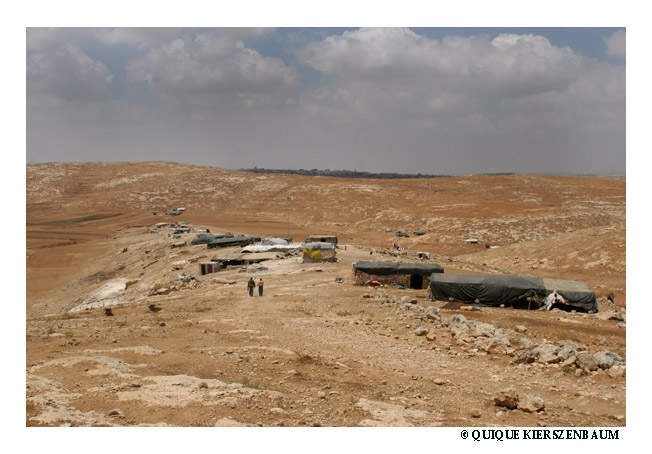
It becomes quickly clear that Mr Fayyad’s reputation as a dry - if consummately professional - technocrat is, to the say the least, incomplete. Sawing the air with his hands, and occasionally thumping the table in front of him, he raised his voice as he cited the example of Israel’s current plan to raze eight Palestinian sheep grazing hamlets in the South Hebron hills - some of which date from the 19th century - to use the land for military training.
“The Israeli Ministry of Defence is trying essentially to take out of existence eight hamlets in southern Hebron under a pretext that you think would be viewed as completely outrageous. The army is running out of space for military training and so you displace an entire population… Telling you that these people have homes in [the southern West Bank town of] Yatta. That is incredibly outrageous. It not that we accept any demolitions whatever but here we are talking about the total elimination of communities.”
He said the international Middle East Quartet of the US, EU, Russia and the UN, had focused on what at present was the “seemingly impossible task of re-launching the peace process in an effective manner… at the expense of paying attention” to a series of violations which included, but were not limited to, expansion of settlements in the occupied West Bank and which had taken place with “no consequences whatever.”
These included nightly incursions by the military into Palestinian cities designated under the Oslo accords as Area A of the West Bank and now supposed to be under control of in large part Western trained Palestinian security forces. “There is not a night when there are not multiple raids or incursions in Area A,” he said. He pointed out that Israeli Prime Minister Benjamin Netanyahu had been in the cabinet under Ariel Sharon that had accepted the internationally agreed Road Map that had among other things called for a halt to settlement building. “It really is outrageous. There is not a single requirement of the road map that the government of Israel can assert they are complying with. Not one.”
The international community had in 2009 issued a series of declarations that all settlement should indeed stop - which led to a ten month settlement freeze while attempts were made to restart substantive negotiations - he said that first the US and then the EU had now in effect told the Palestinians that “the rules of the game have changed”.
Adding that the current international emphasis on “process” was not “well placed”, Mr Fayyad , who will meet the British Deputy Prime minister Nick Clegg during a brief trip to London that starts today, referred obliquely to Mr Netanyahu’s stance during those negotiating efforts, saying: “I’m not against getting together. But when someone says they accept the two state solution but they have overriding security interests in the Jordan Valley and they require a permanent or very long term [military] presence there and there are all these facts on the ground they have to preserve, what exactly is left?”
Calling for a pronounced shift by the international community to a “compartmentalized” approach in which it “raised the bar of accountability” by confronting Israel over the occupation without in any way “delegitimising” Israel itself, he declared: “What the EU, indeed the whole world should do…. is to ask the government of Israel - any government of Israel a straightforward question: ‘Do you support as a solution to this conflict the emergence of a fully sovereign state of Palestine on the territory occupied in 1967, including East Jerusalem? Yes or no?’”
“If they answer yes it is going to be very hard for them to explain how they continue to accept settlement expansion, settler extremism, violence that in certain instances cannot be described other than as outright terrorism.” Mr Fayyad said that attacks on Palestinians and their property, farmland and mosques had increased by 150 percent over the last year.
The same applied to the “violent manner in which the Israeli army deals with non-violent Palestinian protests. This is both wrong and can be extremely dangerous from a security point of view because you simply don’t know whether there is going to be an incident too many.” And indeed both create the feeling that there is a “feeble PA” that “cannot do anything to effectively represent the people by mobilizing international opinion to stop this.”
It is here that Mr Fayyad’s cri de coeur touches directly on his fears for the future. Unwilling to be drawn on the prospect for a third intifada he says instead: “When you cease to become a source of credible and convincing answers to your people... that is really a danger zone. I don’t have to speculate whether we will have an intifada today or tomorrow or the day after tomorrow. Even without that happening I believe we are on a path of growing political untenability. The PA should be strengthened, bolstered. It is a key instrument of peacemaking it would be a travesty if this were to be allowed to continue because sooner or later you become completely politically untenable.”
The most immediate threat, of course, is the current financial crisis of the PA, which despite the huge strides made in financial management under his premiership, left it unable to pay employees salaries in full last month and has meant for Mr Fayyad that “when you start every day wondering whether to pay pharmaceutical companies for medical supplies or pay some other supplier, crisis management overrides everything else”. Though only, he says, a matter of “few hundred million dollars”, the crisis is again a function of a distracted international community - including the region’s Arab neighbors, from whom emergency aid is normally more easily forthcoming.
Mr Fayyad is certainly not advocating the deliberate disbanding of the PA. Nor is he unaware of its mistakes - like the “unacceptable” brutal handling of two recent demonstrations against it here in recent weeks which he regards as violating the sacred principle of “free expression without limitation.” But having fulfilled an ambitious two year state building programme he is undeterred by the lack of political progress from continuing it - not least because of the “transformative” effect it can have on Israel as well as the Palestinians.
“Any leader of Israel about to make a deal with us going to find it a lot easier when they are able to say to their own people ‘what are we really arguing about. That state of Palestine already exists.’” Which is why he says it was a “travesty” that the outcome did not so “capture the imagination” of senior international policymakers that they were prepared to tackle Israel on the policies - like military incursions - which serve to undermine it.
For the Palestinian Prime Minister the more robust approach to such issues he seeks from Western politicians will then play into the internal debate, one from which as he laments, the Palestinian issue is all to absent. Indeed, he says the lack of determined intervention by the international community has meant that the Palestinian issue was not high on the agenda in the last Israeli election and probably won’t be any more so in the next.
For all that, he insists, despite a growing body of contrary opinion that he still believes a two state solution is possible, joking that “by decree Palestinians have to be optimistic.” But only provided there is a new approach by the international community.
Thursday, 26 July 2012


_low.jpg)
low.jpg)
low.jpg)




.jpg)
.jpg)
.jpg)
.jpg)